Loading...
Serving Mountain View, CA and surrounding areas. (650) 582-0099
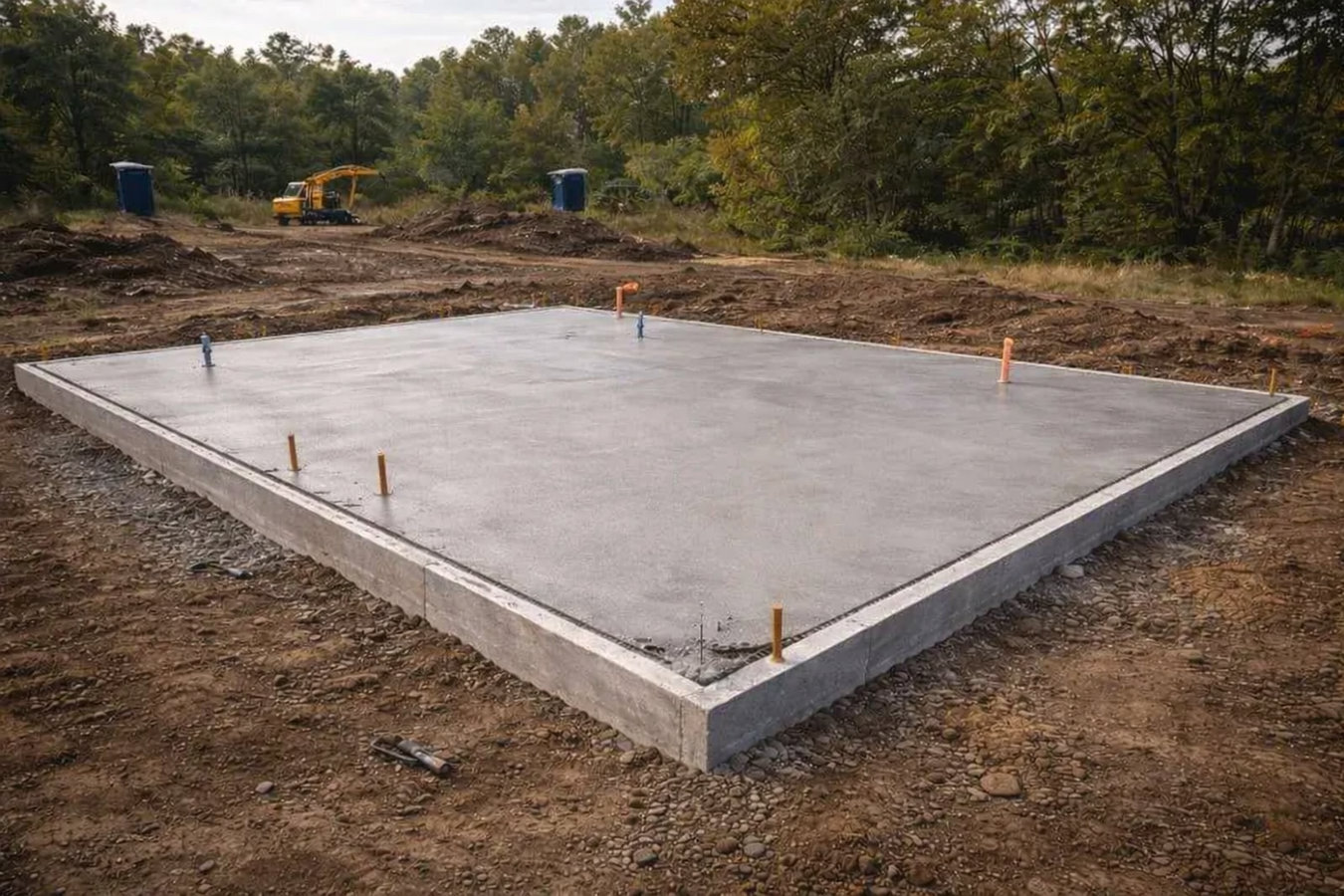
Your home rests on its foundation every day. We build concrete slab foundations designed for Bay Area clay soils and seismic conditions - permits handled, inspections managed, no surprises.
Slab foundation building in Mountain View involves excavating and grading the site, compacting a gravel base, installing reinforcing steel, and pouring concrete in a single layer - most residential pours take one day, with the full project running three to six weeks once permits and curing time are included.
If you are building a new home, an accessory dwelling unit, or a major addition in Mountain View, the foundation is where the project either succeeds or fails. The clay-heavy soils across the Santa Clara Valley expand and contract with the seasons, so the gravel base, steel reinforcement, and footing depth all need to account for local ground conditions - not just a generic spec. For the structural base that supports your home at its perimeter and under load-bearing walls, proper foundation installation details matter as much as the slab itself.
Call us at (650) 582-0099 or request a free estimate online. We respond within one business day.
The most straightforward sign is an active construction project that needs a structural base. If you are building a new home, an accessory dwelling unit, or a major room addition in Mountain View, a slab foundation is likely part of the plan. Mountain View has been actively streamlining ADU permitting, and every one of those structures needs a proper foundation before framing can begin.
Small hairline cracks in concrete are normal over time, but cracks that are widening, running diagonally, or appearing in multiple places at once signal that the foundation may need replacement rather than patching. In Mountain View's clay-heavy soil, the seasonal wet-dry cycle shifts slabs gradually over years. What starts as a minor crack can become a structural problem if left alone.
When a slab shifts or settles unevenly, the house frame above racks slightly out of square. This often shows up first as doors or windows that feel stiff, stick in their frames, or leave visible gaps at the corners. If this is happening in multiple rooms at the same time, it is worth having a foundation professional take a look before the problem progresses.
Mountain View's rainy season runs from roughly November through March, and poorly graded or damaged slabs can develop drainage problems that let water collect against the foundation. Over time, water intrusion weakens the concrete and can cause the soil beneath to shift. Standing water near your foundation after a storm that does not drain within a few hours is worth investigating promptly.
We handle every phase of slab foundation work from first shovel to final inspection. That means site excavation, soil grading, gravel base compaction, vapor barrier installation, plumbing and electrical conduit routing under the slab, steel reinforcement placement, the concrete pour, surface finishing, and curing management. Nothing in that sequence is optional - each step exists because skipping it shows up as a problem later. For larger structures and ADU projects, proper foundation installation includes the full perimeter and interior load path design, not just the flat slab.
We also coordinate all permit work with Mountain View's Building Division - you do not need to visit city hall or manage the inspection schedule yourself. For projects where the finished slab will carry structural loads - posts, bearing walls, or heavy equipment - the steel layout and footing design are specified to handle those loads from the start. If your project also needs deep structural support below the slab, our separate concrete footings work is designed to work as a system with the slab above it.
Full slab-on-grade pours for new single-family homes - sized and reinforced for Bay Area clay soils and seismic requirements, with permits and inspections included.
Slab foundations for accessory dwelling units and major additions - built to Mountain View's current permitting standards, with a timeline that accounts for city inspection scheduling.
Removal of existing cracked or failing slabs and replacement with a properly engineered pour - including improved gravel base prep and drainage to address whatever caused the original failure.
Full permit handling for projects where a soil report or structural engineering review is required - with all documentation organized for your records when the project closes.
Mountain View sits in the Santa Clara Valley on soils that contain a significant amount of clay. Clay swells when it absorbs rain during the wet season - roughly November through March - then shrinks and pulls back during the long dry summer. That back-and-forth movement puts real stress on any concrete slab resting on it, which is why gravel base preparation, proper drainage, and adequate steel reinforcement are not optional steps here. Add the seismic reality: the city sits near the San Andreas and Hayward fault systems, and California's building standards for this region require more steel inside the slab than you would see in most other parts of the country. We work throughout Mountain View and in neighboring Santa Clara and Sunnyvale, where soil conditions and permit requirements follow the same local patterns.
A significant portion of Mountain View's housing stock - especially the ranch-style homes built in the 1950s and 1960s - sits on original slabs that are now 50 to 70 years old. Concrete poured in that era was often mixed with less reinforcement than current standards require, and decades of soil movement in the valley take a toll. The City of Mountain View Building Division manages permit applications and schedules inspections - a process your contractor should handle entirely on your behalf. For seismic hazard context in this area, the California Geological Survey seismic hazard maps show exactly why foundation reinforcement requirements here are stricter than in most of the country.
We visit the property, assess the lot slope, soil conditions, and access, and give you a written estimate that covers every phase - permits, gravel base, steel, pour, and cleanup. We respond within one business day of your first contact. No phone quotes for foundation work - the price depends on what is actually under your feet.
We submit the permit application to Mountain View's Building Division before any work begins. Permit approval typically takes one to three weeks. We handle the paperwork, track the status, and schedule the pre-pour inspection - you do not need to make a single call to city hall.
The crew excavates, grades, installs the gravel base and any under-slab utilities, and sets the steel reinforcement inside the forms. A city inspector visits before the concrete trucks arrive. The pour itself usually takes most of one day. Keep children and pets clear of the site for the full duration.
We apply a curing compound and protect the surface while the concrete reaches full strength - a process that takes about four weeks. Mountain View's Building Division schedules the final inspection, and once the inspector signs off, we clean up and walk you through the finished work so you know exactly what to watch for in the months ahead.
Free written estimate. Permits handled from first application to final inspection. We reply within one business day.
(650) 582-0099Every slab we pour accounts for Mountain View's clay-heavy ground. That means the right gravel base depth, vapor barrier, and steel layout for local soil behavior - not a generic spec. The American Concrete Institute standards we follow are calibrated to real-world conditions, including the kind of seasonal soil movement common throughout this valley.
Mountain View sits near two major fault systems, and California's requirements for foundation reinforcement in this zone reflect that. We size the steel inside every slab to handle ground movement - and the city's pre-pour inspection verifies it before the concrete goes in. A permit on file means your home's foundation is on record as meeting local seismic standards.
Mountain View has been actively encouraging ADU construction, and we have direct experience navigating the city's building permit process for these structures. We handle the application, coordinate any required inspections, and work to keep your project on schedule - a failed foundation inspection can set an ADU project back by weeks, and we build to pass the first time.
In a Bay Area market where foundation costs already run high, the last thing you need is a quote that changes once work begins. Our written estimates cover every phase - excavation, base prep, steel, pour, permits, and cleanup - so you can compare it clearly against other bids and make a confident decision without feeling pushed.
Foundation work is one of those projects where the quality of the contractor shows up years later - in a slab that holds level versus one that cracks, and in a permit record that protects your home when you sell it. Every one of these points comes back to the same commitment: building it correctly the first time so you never have to think about it again. For license verification, the California Contractors State License Board lets you look up any contractor's status in minutes.
Full foundation installation for new builds and major retrofits - perimeter walls, load paths, and seismic anchoring built to Mountain View's current standards.
Learn MoreDeep concrete footings that carry structural loads from posts, columns, and bearing walls down to stable ground beneath your slab.
Learn MoreBay Area contractors book out weeks in advance - reach out now and we will get your permit application moving before the busy season fills up.