Loading...
Serving Mountain View, CA and surrounding areas. (650) 582-0099
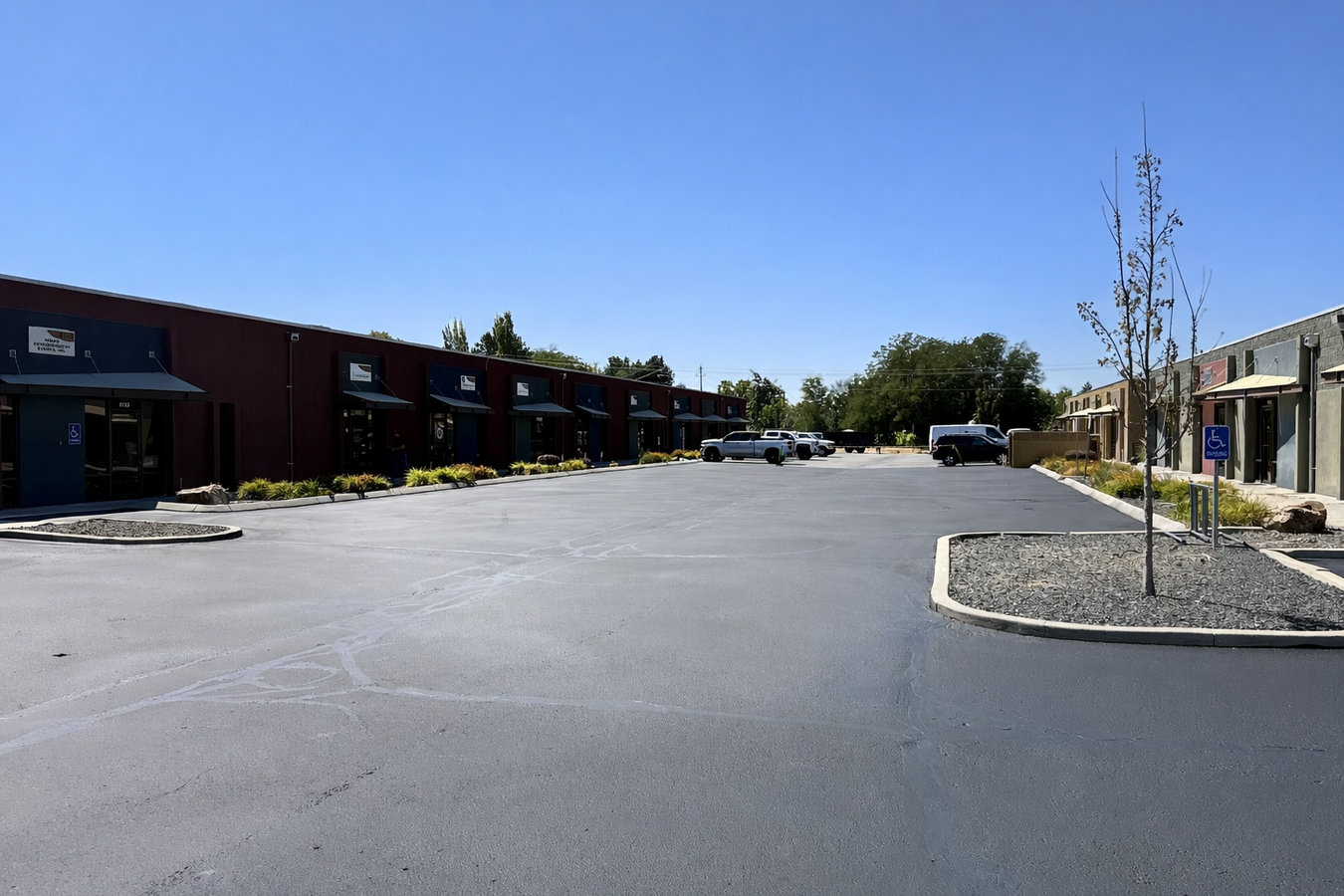
Mountain View Concrete Contractors serves Milpitas with concrete parking lot building, driveway replacement, patio construction, slab foundations, and retaining walls. Milpitas is built on expansive bay clay soils that swell in winter rains and shrink through dry summers, and most of the city's homes were built in the 1960s and 1970s when base preparation standards were less demanding than they are today. We know what that combination does to older concrete, and we build new work to account for it. We respond within one business day and provide written estimates before any work starts.
Milpitas has a dense mix of commercial corridors along Montague Expressway and near the Great Mall where parking lots endure heavy vehicle loads on bay clay subgrades that shift seasonally. Our concrete parking lot building work includes proper subgrade stabilization, drainage planning, and expansion joint layout to handle the movement that Milpitas clay soils produce - work that determines whether a new lot surface holds for years or begins to crack in the first rainy season.
Driveways on Milpitas's older single-family streets - particularly the ranch homes in the western neighborhoods built in the 1960s and early 1970s - have spent four to five decades on bay clay that expands and contracts every year. A replacement driveway with a properly compacted gravel base and correctly spaced control joints is built to work with that soil movement rather than resist it until it cracks.
ADU construction is active across Milpitas as Santa Clara County implements state housing law, and detached accessory structures, garage conversions, and backyard additions all require new concrete slab foundations. On Milpitas bay clay soils, vapor barrier selection and reinforcement scheduling are more consequential than they would be on sandier ground - the soil compresses differently under the fresh pour and during the first wet season.
Properties in Milpitas near the foothills on the eastern edge of the city - toward Ed Levin County Park - often have sloped lots that require retaining walls to create level yard or parking areas. In the flatter western neighborhoods, low retaining walls are common for separating yard grades on smaller lots. Clay soil behind a retaining wall becomes significantly heavier when saturated, and a wall built without proper drainage weep holes or a gravel drainage layer behind it carries that additional load every rainy season.
Milpitas summers run warm and dry from June through September, making back patio space a practical addition for most households in the city. A concrete patio on Milpitas clay soil needs to be sloped away from the foundation with a consistent grade so that winter rain drains off the surface rather than pooling near the house - drainage error during the pour is the most common cause of patio water problems in this city.
Sidewalk panels on Milpitas residential streets from the 1960s and 1970s show the same clay soil movement as driveways and flatwork on the same lots - panels that have settled unevenly at the joints are a trip hazard and a liability concern for property owners. Replacement panels poured to current grade standards restore a smooth surface and meet the City of Milpitas requirements for accessible pedestrian routes along residential streets.
Milpitas incorporated in 1954 and built out most of its residential neighborhoods through the 1960s and 1970s as Silicon Valley expanded northward. That growth era produced a city full of ranch-style and split-level homes on 5,000-to-7,000-square-foot lots, most of which were built on a subgrade of bay mud and expansive clay. Those soils are the defining challenge for any concrete work in Milpitas. Bay clay expands measurably when it absorbs moisture during the wet season and contracts as it dries through the summer, and that repeating cycle applies stress to concrete flatwork from below every year. Homes built in the 1960s and 1970s now have concrete that has been through 50 or more of those wet-dry cycles, which is why cracked driveways, settled walkways, and failing garage slabs are so common across the older western neighborhoods.
Milpitas averages 14 to 16 inches of rain per year, concentrated between November and March. The proximity of some neighborhoods to the South Bay marshlands near Alviso means certain areas sit on soils with even lower bearing capacity than the city average, and concrete work there requires more attention to base stabilization before the pour. The city also sits near the Calaveras and Hayward faults, and the intermittent seismic activity in the Bay Area adds movement stress to concrete that has already been weakened by soil cycling. Local building regulations are administered by the City of Milpitas Building and Safety Division, and permit requirements for concrete work follow Santa Clara County standards.
Our crew works throughout Milpitas regularly, and we understand the split between the city's older single-family neighborhoods and the newer construction near the BART transit corridors. The older ranch-home streets on the west side of the city - near Calaveras Boulevard and the areas that developed in the 1960s - are where we see the most flatwork replacement demand, because those slabs have been on bay clay for the longest time. The newer townhome and condo developments closer to the Milpitas BART station and along Montague Expressway involve different work - common-area flatwork, parking structures, and HOA-coordinated exterior maintenance rather than straightforward residential driveway replacement.
Local landmarks give us good orientation throughout the city. Work in the neighborhoods near the Great Mall tends to involve commercial or mixed-use properties, while homes out toward the hills near Ed Levin County Park are on more varied terrain with steeper lots. The area between Interstate 680 and Interstate 880 covers most of the flat residential streets where single-family concrete replacement work is concentrated.
We also serve Sunnyvale and Fremont, two cities that border or sit near Milpitas and share many of the same bay clay soil conditions and tract-home building stock from the same era.
Call or submit a request online and tell us what you are seeing - cracked driveway, a settled walkway panel, a parking lot section that has heaved, or a garage slab that is no longer level. We respond to every inquiry within one business day.
We visit the property, look at the concrete condition and the base beneath it, and assess what the Milpitas soil conditions mean for the right repair or replacement approach. You receive a written estimate with a clear scope and cost range before you make any decision.
Once you approve the scope, we apply for any required permits from the City of Milpitas. Demo of the old concrete and base re-grading happen before the pour - the subgrade work is what addresses the bay clay movement and determines how long the new concrete holds up.
The concrete pour and surface finishing are typically completed in a single day for most residential projects. We walk you through the finished work, review curing time and any care instructions, and coordinate city inspection sign-off on permitted jobs before we close out the project.
We work throughout Milpitas - from the older ranch neighborhoods on the west side to the commercial corridors near Montague. Call or submit a request and we respond within one business day.
(650) 582-0099Milpitas is a city of roughly 80,000 people in Santa Clara County, sitting between San Jose to the south and Fremont to the north. The city occupies about 13.6 square miles and is one of the denser cities in the South Bay. Most of the residential neighborhoods date from the 1960s and 1970s, when Silicon Valley's northward expansion brought a wave of single-story and split-level ranch homes to the flatlands between the bay and the Diablo Range foothills. The eastern edge of the city rises into the hills and is anchored by Ed Levin County Park, a well-known local destination for hiking and hang gliding with views across the South Bay. The central and western portions of the city are flat, dense residential streets, with major commercial corridors along Calaveras Boulevard and Montague Expressway.
The city is also home to the Great Mall of the Bay Area, one of the largest outlet retail centers in Northern California and the landmark most people outside Milpitas associate with the city. Milpitas added two BART stations in 2020 - the Milpitas station and Berryessa/North San Jose - connecting residents directly to the broader Bay Area transit network. Major tech and semiconductor employers including Western Digital, Lam Research, and KLA Corporation have campuses in Milpitas, giving the local economy a strong high-income employment base. Owner-occupancy rates are notable for a Bay Area city, with more than half of housing units owner-occupied - concentrated in the older single-family neighborhoods. Nearby San Jose and Santa Clara share similar soil conditions and housing ages, and we serve homeowners and property owners across all three cities.
Transform your outdoor space with a professionally poured concrete patio.
Learn MoreAdd texture and pattern to concrete surfaces for lasting curb appeal.
Learn MoreSafe, level sidewalks poured and finished to local code standards.
Learn MoreSmooth, strong garage floors built for daily vehicle and foot traffic.
Learn MoreStructurally sound retaining walls that hold soil and add definition.
Learn MoreInterior and exterior concrete floors installed flat and on spec.
Learn MoreSolid concrete steps built for safety, stability, and clean appearance.
Learn MoreProperly graded and reinforced slab foundations for any structure.
Learn MoreFull foundation installs engineered for long-term structural integrity.
Learn MoreCommercial-grade parking lots poured for heavy traffic and longevity.
Learn MoreCall us or submit a request online - we respond within one business day and provide a written estimate before any work begins.