Loading...
Serving Mountain View, CA and surrounding areas. (650) 582-0099
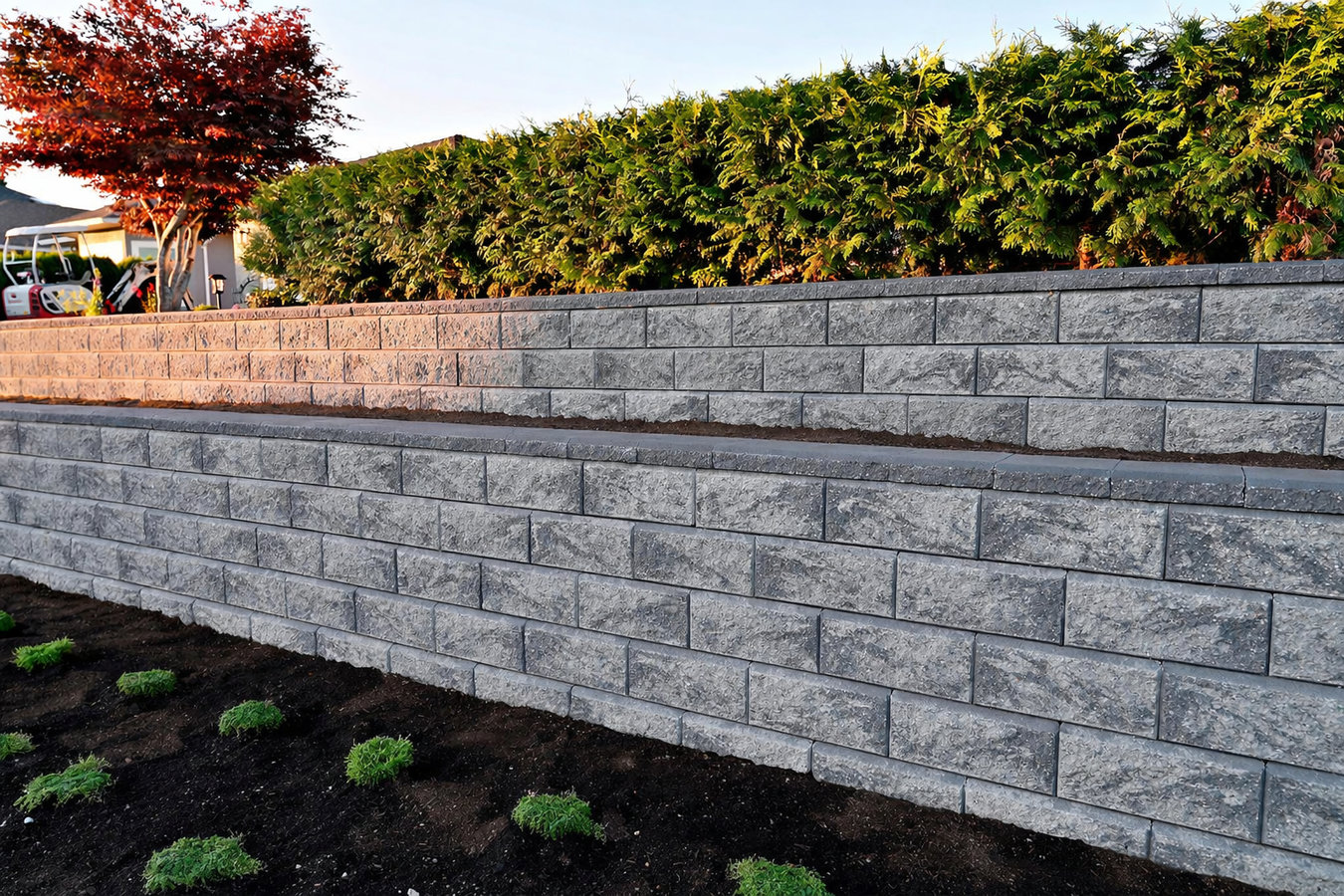
Sloping yards and creeping soil damage your landscaping, hardscape, and foundation over time. We build concrete retaining walls designed for Bay Area clay soils and seismic conditions - with drainage built in and permits handled from start to finish.
Concrete retaining walls in Mountain View hold back soil on a slope so it does not slide, erode, or push into your driveway, landscaping, or foundation - most residential walls take two to four days to pour and form, with a curing period before backfilling begins.
If your yard has a hillside, raised planting bed, or grade change that feels like it is slowly taking over, that is what a retaining wall is built to solve. Mountain View's clay-heavy soils absorb water and expand during the rainy season, then shrink back in summer - that cycle puts real pressure on whatever is holding a slope in place. A properly built wall with adequate drainage handles that movement year after year. For outdoor spaces that sit just above or below your wall, our concrete floor installation team can finish the flat area the wall creates.
Call us at (650) 582-0099 or request a free estimate online. We respond within one business day.
If you notice soil in a raised bed or along a slope slowly moving toward your driveway or neighbor's property after winter rains, that is a clear warning sign. Mountain View's clay soils absorb a lot of water and can shift significantly during a wet season. A retaining wall stops that movement before it damages your landscaping, hardscape, or foundation.
A retaining wall that is tilting forward - even slightly - is under more stress than it can handle and may be close to failing. Horizontal cracks near the middle of a wall face are especially serious, because they often mean the wall is bending under soil pressure. A wall that falls can damage property and create a real safety hazard, so do not wait on this one.
If water collects at the bottom of a hillside or raised area every time it rains, the slope is not draining properly. Over time, that standing water saturates the soil and increases pressure on whatever is holding the slope back - or accelerates erosion if nothing is. A retaining wall with built-in drainage solves both problems at once.
Many Mountain View homes - especially those built in the 1950s through 1970s on lots with natural grade changes - have sloped areas that are essentially unusable. A retaining wall can turn that wasted slope into a flat, usable patio, garden bed, or lawn area. If you have been looking at a hillside in your backyard and wishing it were flat, a wall is how that happens.
We build cast-in-place concrete retaining walls from excavation through final backfill. Every project starts with a trench dug along the base of the slope, followed by steel-reinforced forming, the pour, and a curing period before soil goes back behind the wall. Drainage is not an optional add-on here - it is built into every wall we install, because water pressure behind a wall is one of the leading causes of premature failure. For properties where the area behind or in front of the wall will become a finished outdoor space, our concrete floor installation team handles the flat slab work that follows.
We also build concrete steps that connect yard levels separated by a retaining wall, making the finished outdoor space functional and safe to move through. If your slope project involves a tiered yard with multiple levels, the walls and the concrete steps construction are designed and built together so the transitions between levels look intentional and hold up as a system. For walls over 4 feet in Mountain View, we handle the permit application through the city's Building Division - you do not need to visit city hall or manage that process yourself.
Cast-in-place concrete walls for hillside lots, raised planters, and grade changes - built with drainage and reinforcement for Mountain View's clay soils.
Multiple wall levels with integrated concrete steps, turning unusable sloped yards into flat, connected outdoor spaces.
Removal of failing or leaning block and concrete walls and replacement with a properly engineered structure - including improved drainage to prevent the same failure from recurring.
Full-service permit handling for walls over 4 feet, including coordination of structural engineering review as required by the City of Mountain View.
Mountain View sits on Bay mud and clay-heavy soils that expand when wet and shrink when dry. That back-and-forth movement puts extra stress on any structure holding a slope in place - which is why deeper footings and drainage built into the wall from day one are not optional extras here, they are the baseline. Add the Bay Area's seismic reality: the city requires a structural engineer's review for walls over 4 feet precisely because the ground can move sideways, not just settle. We work regularly throughout Mountain View and in neighboring Sunnyvale and Los Altos, and soil conditions and permit requirements in this part of the Bay Area are what we build for every day.
Timing matters here too. Mountain View's rainy season runs roughly November through March, and wet soil makes excavation harder and curing less predictable. Most experienced local crews recommend scheduling wall projects between April and October - the dry season - when the ground is stable and the work goes faster. If your slope is already showing movement or erosion heading into fall, do not wait for spring to address it. The City of Mountain View Building Division handles permit applications, and your contractor should manage that process for you. For California contractor license verification, the California Contractors State License Board lets you look up any contractor's status in about two minutes.
We visit your property, walk the slope, and check site access and soil conditions. You get a written estimate that covers what is included - permits, drainage, and cleanup - with no line items that appear only on the final invoice. We reply within one business day of your first contact.
For walls over 4 feet, we submit the permit application to the Mountain View Building Division before any work begins. This typically takes one to three weeks. We handle the process entirely - you do not need to visit city hall or fill out forms yourself.
The crew digs the footing trench, sets reinforcement, and pours the concrete. This is the loudest part of the project. The concrete then cures for at least a week before the forms come off - rushing this step is one of the most common causes of early wall failure, so we do not skip it.
Once cured, we install the drainage layer behind the wall, backfill and compact the soil in stages, and clean up the work area. We walk the finished wall with you, explain what to watch for over the first year, and make sure you know how to reach us if anything comes up.
Free written estimate. Permits handled. No pressure - just a straight answer on what your project needs and what it will cost.
(650) 582-0099We build a drainage layer and weep holes into every wall we install - not as an upsell, but as a standard part of the job. Water pressure behind a wall is one of the leading causes of premature wall failure, and skipping drainage to cut the quote is a short-term saving that shows up as a long-term problem.
We submit the Mountain View building permit application, coordinate any required structural engineering review, and schedule the city inspection - all without you needing to make a single call to city hall. Your job does not start until the permit is approved.
Our wall designs account for Mountain View's expansive clay soils and proximity to active fault lines. Footing depth, wall thickness, and steel reinforcement are sized for local conditions - not a generic spec pulled from a catalog. The American Society of Concrete Contractors publishes the industry standards we work to.
Before the crew leaves, we walk the finished wall with you, show you the drainage outlets, and explain what normal curing looks like versus what to call us about. You will know exactly what was built and how to reach us if anything changes in year one.
Every one of these points adds up to the same thing: a wall that is built correctly the first time and a project that does not leave you with surprises. For homeowners investing in a slope solution that needs to last 50 years, that combination matters more than the lowest bid in your inbox.
Pour a flat, finished concrete floor in the space your retaining wall creates - garages, patios, and outdoor living areas.
Learn MoreConnect the levels divided by your retaining wall with safe, well-built concrete steps designed to match the wall.
Learn MoreMountain View's dry season fills up fast - lock in your start date now so your slope is solved before the next rainy season arrives.