
Loading...
Serving Mountain View, CA and surrounding areas. (650) 582-0099
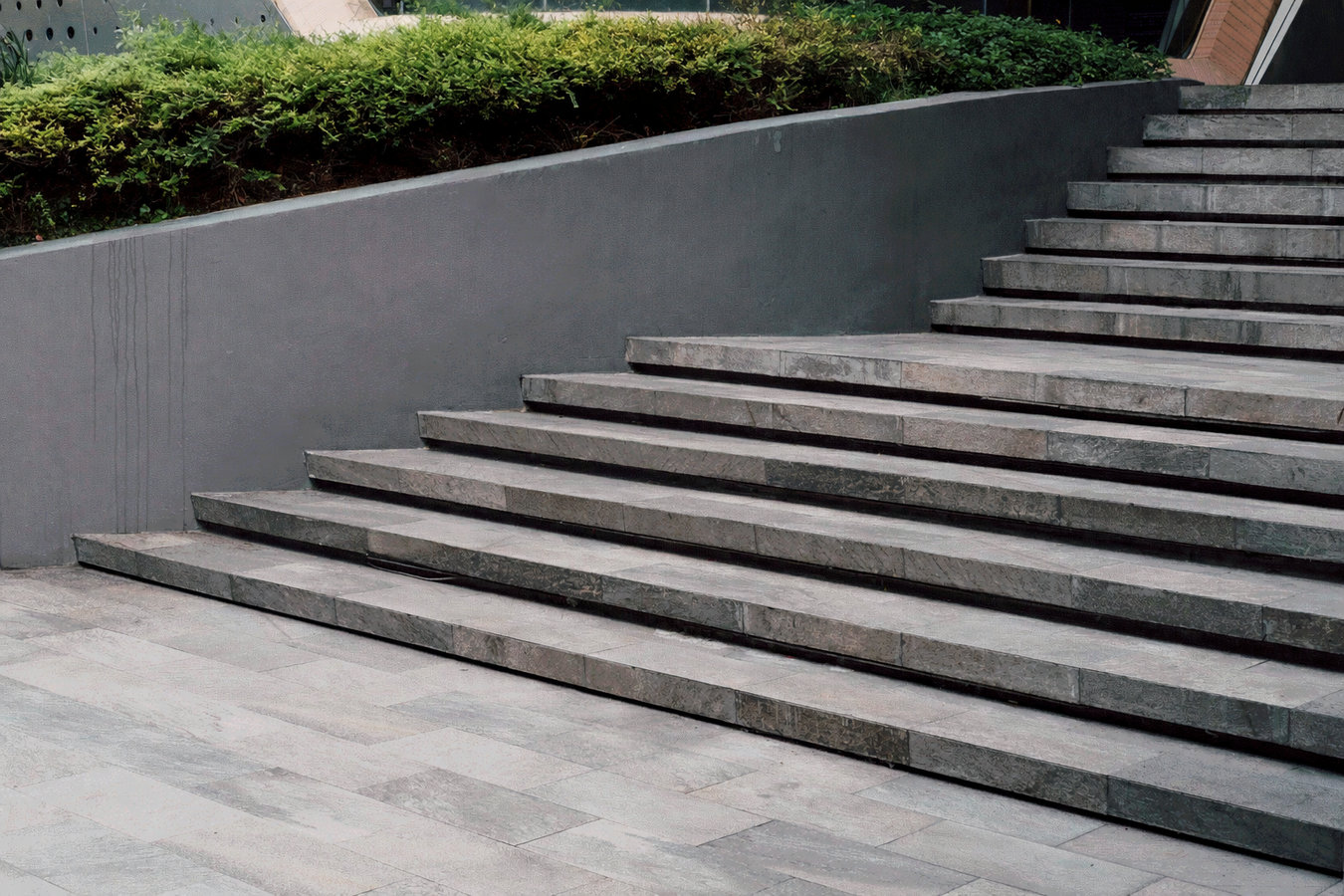
Cracked, sunken, or uneven steps are a trip hazard and the first thing every visitor sees. We build concrete steps in Mountain View for front entries, backyard levels, and retaining wall systems - with proper reinforcement and finishes that hold up in our climate.
Concrete steps construction in Mountain View means forming and pouring reinforced steps in place for front entries, yard level changes, or retaining wall transitions - most residential step projects take one to two days of active work and are walkable within 48 hours of the pour.
A lot of Mountain View's postwar ranch homes have original concrete entry steps that have been shifting and cracking for decades - and many homeowners put off replacing them because it feels like a big project. It usually is not. We handle the forming, reinforcement, and pour, and the steps look better immediately. For homes with yard-level changes or new concrete retaining walls, steps are often the final piece that makes the outdoor space fully usable - connecting a lower yard to an upper patio or garden area safely.
Call us at (650) 582-0099 or send us a message online. We respond within one business day.
If one step has dropped lower than the one below it, the soil underneath has shifted. Mountain View's clay soil swells and shrinks with the wet-dry cycle, and steps without adequate base preparation sink unevenly over time. An uneven step-to-step height change is one of the most common causes of trip-and-fall accidents on residential entries.
The nose of a concrete step - the outer edge where you place your foot - takes the most wear. When the surface layer starts to flake or crumble, the structural concrete underneath is exposed to moisture. Left alone, the deterioration accelerates and the step edge eventually becomes a jagged surface that catches feet and socks.
Hairline cracks are normal in mature concrete. Cracks wider than a credit card thickness running across a step face or down the riser are a different issue - they mean the slab has moved or the concrete has failed under load. Water gets in through these cracks during wet winters, freezes overnight on cold nights, and widens the crack from the inside out.
If there is a visible gap between the bottom of your front door slab and the top step, or between the top step and the entry porch, the steps have settled away from the structure. This gap collects water, allows pests to nest underneath, and makes the entry look neglected. It also means the steps are no longer properly supported along their top edge.
We build poured-in-place concrete steps for front entry replacements, backyard level transitions, tiered retaining wall systems, and pool deck connections. Each project starts with removing the old structure, preparing the base, and forming the steps at code-compliant riser and tread dimensions before the pour. For properties with a retaining wall that creates a level change, the steps and the concrete retaining walls are designed together so the finished outdoor space moves intuitively from one level to the next.
Finish options include standard broom texture for grip, exposed aggregate for a more decorative look, and stamped patterns that match an adjacent patio or walkway. We can also include anchor points during the pour for a future railing or one we install at the same time - it is much cleaner to plan the anchor placement before the concrete sets than to drill into finished steps afterward. For properties that need a new foundation-level slab as part of an entry rebuild, our slab foundation building team handles that work so the steps and the landing slab are built to match.
Remove and replace original entry steps for homes where the existing steps have cracked, settled, or pulled away from the entry landing.
Steps built as part of a tiered yard or retaining wall system, connecting different yard levels so the outdoor space is fully usable and safe to move through.
Steps that link a pool deck, patio, or outdoor living area to the main yard or to different elevation levels - designed to match the adjacent surface finish.
Poured-in-place steps for additions, ADUs, or new construction where no prior steps exist and the rise and run need to be designed from scratch to meet current code.
Mountain View's clay soils are the main reason original entry steps from the 1950s and 1960s have settled and cracked the way they have. Clay absorbs moisture and expands during wet winters, then dries out and contracts during the summer. Steps that sit on a clay base without proper compaction and base preparation move with that cycle year after year. The result is steps that are lower on one side than the other, or that have a gap at the top where they used to meet the entry slab. Getting the base right before the pour - not just forming over what is there - is what separates a replacement that lasts from one that repeats the same problem. We serve homeowners throughout Mountain View and in nearby Los Altos and Cupertino, where the same soil conditions and postwar housing stock are common.
Homes on smaller lots near downtown Mountain View - the older neighborhoods closest to Castro Street - often have steps with limited side access that makes forming more involved. We account for that kind of site constraint in the estimate rather than discovering it on the first day of work. If your entry or yard has awkward access, that is something to mention when you reach out so we can factor it into the plan from the beginning.
Call or submit a request online - let us know where the steps are, how many there are, and what is going on with them. We respond within one business day and schedule a site visit at no charge.
We look at the steps in person, check the base condition, discuss the finish you want, and cover any railing or drainage considerations. The written estimate includes everything - demo, forming, pour, finishing, and permit research - so the number you see is the number you pay.
On the scheduled day we remove the old steps, prep the base properly, set the forms at code dimensions, and pour. Most residential step projects are poured in a single day. We keep the entry or yard access interrupted for the minimum time possible.
After the pour we let the concrete cure before opening the steps for foot traffic - typically 24 to 48 hours. We do a final walkthrough with you to confirm the step heights feel natural, the finish looks right, and nothing needs a touch-up before we leave.
No obligation, no pressure. We respond within one business day and the site visit is free.
(650) 582-0099We do not just form and pour over whatever base is there. For Mountain View's clay soils, proper base compaction and sub-base preparation before the pour is what determines whether the steps stay level five years from now. This step is where most cheap jobs cut corners.
California residential building code specifies riser height and tread depth ranges for steps. We form to those dimensions by default - not because an inspector is watching, but because steps built to code feel natural underfoot and are less likely to cause a trip-and-fall.
We hold the state concrete contractor license required for permit-pulling and structural concrete work throughout California. For step projects that require a city permit - typically those tied to larger entry or landscape rebuilds - you need a licensed contractor on the application.
If your steps will need a railing - now or in the future - we can build anchor points directly into the pour at no extra cost. Adding anchors during the pour is cleaner and stronger than drilling into finished concrete after the fact. Tell us at the estimate stage and it is part of the plan.
Concrete steps are a small project that have a big impact on how a home looks and how safe it is to approach. Get the base right and use a contractor who knows local conditions and code requirements - the result lasts decades. Learn about Mountain View Building Division permits if your project may be part of a larger renovation.
If your entry steps connect to a landing slab that also needs work, we handle the foundation slab as part of the same project.
Learn MoreSteps built as part of a tiered retaining wall system - designed together so the transitions between yard levels are safe and intentional.
Learn MoreCracked and sunken steps get worse every winter - reach out now for a free written estimate.