Loading...
Serving Mountain View, CA and surrounding areas. (650) 582-0099
Everything you build sits on its footings. In Mountain View, Bay Area clay soils and seismic requirements mean footings need to be deeper, stronger, and inspected before the pour. We handle every step - from permit to final city sign-off.
Concrete footings in Mountain View are the underground base that holds up whatever structure is built above - a deck, an addition, a retaining wall, or a new foundation - poured deep enough to sit in stable soil below the zone that shifts with rain and drought, with most residential footing jobs completed in one to three days once permits are approved.
The depth is not arbitrary. Mountain View's clay-heavy soils expand when wet and shrink when dry, and that seasonal movement happens in the upper few feet of ground. A footing that is too shallow ends up in that active zone, and you will see the result in cracks, lean, and settling within a few years. Combined with Bay Area seismic requirements - which dictate how much steel reinforcement goes in and how the footing connects to the structure above - getting the design right from the start is the only way to avoid problems later. For projects that also involve a larger foundation system, our foundation installation team coordinates the footing and slab work together.
Call us at (650) 582-0099 or request a free estimate online. We respond within one business day.
If a structure that used to be straight is now noticeably tilted, the footing underneath it has likely shifted or deteriorated. In Mountain View's older neighborhoods, many decks and fences were built decades ago on footings that were not designed to current standards. A lean that gets worse after rainy season is a sign the footing is no longer doing its job.
Any new structure attached to or near your home needs proper footings before anything else can be built. With Mountain View's strong demand for accessory dwelling units, many homeowners are discovering that their existing slab or soil is not ready to support new construction without new footings first. Getting this assessed early saves money compared to redesigning after the foundation work has already begun.
Hairline cracks in concrete are common and often harmless. But cracks that are wider than a pencil, that run diagonally, or that are getting larger over time suggest the footing below is moving. Mountain View's clay-heavy soils expand when wet and shrink when dry, and that seasonal movement stresses footings that were not built deep enough to escape that zone.
When water collects against your home's base after a storm, it can erode the soil around your footings and eventually undermine them. Mountain View's rainy season runs roughly November through March, and homes in low-lying areas near the bay are especially vulnerable to drainage problems that quietly damage footings over years. If you notice standing water near your foundation after a storm, have a contractor assess the situation before the problem worsens.
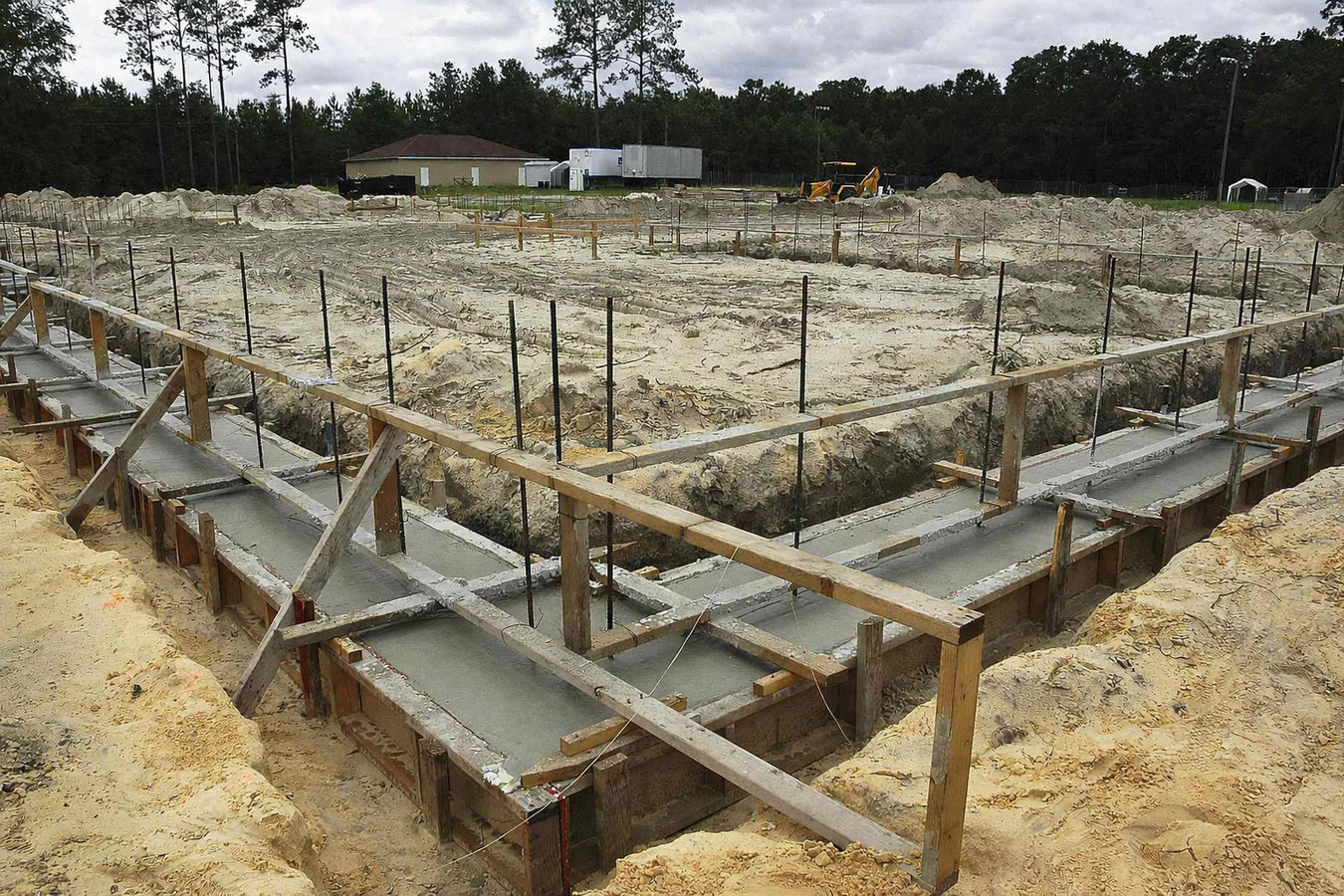
We install concrete footings for decks, additions, retaining walls, fences, ADUs, and any structure that needs a properly engineered underground base. Every job starts with trench excavation to the required depth, followed by wood or steel forming, steel rebar placement, and the pour - which is done only after the city inspector has verified the work. That inspection is not a formality: it is an independent confirmation that the trench depth, width, and reinforcement match what the permit drawings specify. For projects where the footings will support a full foundation system, our foundation installation team handles the footing and slab work as a coordinated scope so nothing is left to chance at the transition between the two.
We handle permit applications through the City of Mountain View's Building and Safety Division on every job that requires one - which is most structural footing work. For larger or more complex projects, particularly those involving a slope or the bay-adjacent soils found in parts of Mountain View, we can coordinate with a soils engineer before the design is finalized. That extra step is not an upsell - it is how you avoid a footing that settles unevenly after the first rainy season. The ABAG hazard maps for the Bay Area identify which neighborhoods sit on higher-risk soils - a useful reference if you are unsure how your lot compares.
Continuous or pier footings for attached and detached decks, designed to depth and sized for Bay Area seismic requirements.
Footings for room additions and accessory dwelling units, coordinated with foundation and framing contractors for a complete structural base.
Wide, deep footings for concrete retaining walls, built to handle the lateral soil pressure specific to Mountain View's clay ground conditions.
Drilled pier footings for heavy gates, masonry pillars, and fences that need a stable base without a full foundation system.
Mountain View is in the heart of one of the most seismically active regions in the country, and the clay-heavy soils throughout the Santa Clara Valley add another layer of complexity. Clay expands when it absorbs water and shrinks when it dries out - and the footings in most Mountain View homes built before 1980 were not designed with that seasonal movement in mind. As those older properties are renovated, decks replaced, or ADUs added, the footing question comes up every time. The USGS earthquake hazard data for the Bay Area confirms what local contractors already know: this region requires a higher standard of structural design than most of the country. We work regularly throughout Mountain View and across the South Bay, including Palo Alto and Los Altos, where the same soil and seismic conditions apply.
Mountain View's older residential neighborhoods - particularly the areas around Cuesta Park and Castro Street - also have tight lots with mature trees, narrow side yards, and limited staging space for equipment. Footing work in these neighborhoods requires careful planning around root systems and neighbor property lines. A contractor who walks the site before quoting will identify these constraints and include them in the estimate, rather than discovering them on pour day. The USGS Earthquake Hazards Program provides detailed risk data for the Bay Area that informs how seismic footing requirements are applied locally.
We ask a few basic questions - what you are building, where on the property, and whether you have pulled a permit before. Then we schedule a site visit to check access, note any trees or slopes, and take measurements. You receive a written estimate within a few days. We respond to all inquiries within one business day.
We submit the permit application to the City of Mountain View's Building and Safety Division on your behalf. City review typically takes two to four weeks for straightforward residential projects. You do not need to visit city hall - we handle the paperwork and keep you updated on the status.
Once the permit is in hand, the crew digs to the required depth, sets up forms, and places the steel reinforcement. Before any concrete is poured, the city inspector visits to verify the trench depth, width, and rebar are correct. This inspection is what puts the work on record - and protects you if something ever comes into question later.
After inspection is passed, the concrete is poured and finished. The footing needs about a week before framing or building begins on top of it, and up to 28 days for full strength. We coordinate with your framing or foundation contractor on the handoff timing so no one is waiting on the concrete when they are ready to proceed.
Free written estimate. We pull the permits and handle the city inspector visit - you just need to tell us what you are building.
(650) 582-0099Mountain View's clay soils and bay-adjacent ground conditions affect how footings need to be designed. We ask the right questions about your location before finalizing a design - and for larger or complex projects, we coordinate with a soils engineer when the site warrants it. Your footing will not settle unevenly after the first rainy season.
Bay Area building requirements for seismic reinforcement apply to footings in Mountain View, and we build them into every job that requires a permit. That means more rebar, the right connection hardware, and a design that has been reviewed by the city before the pour happens. When the ground moves, your structure stays connected to its foundation.
We handle the City of Mountain View permit application on your behalf, coordinate the city inspector visit before the pour, and ensure the final project is on record. Unpermitted footing work is one of the most common deal-killers in Mountain View real estate transactions. Working with us means that problem never comes up. Verify any contractor's license at the CSLB website
Mountain View's older neighborhoods have mature trees, narrow side yards, and carefully maintained gardens. We plan equipment staging and access routes carefully, protect root systems and landscaping, and clean up completely at the end of each day. Your neighbors will not know the work happened - and your yard will look like itself again when it is done.
A footing job done right is invisible when it is finished - and that is exactly how it should be. The work you never see is what keeps everything above it standing straight and solid for decades.
Lifting and releveling a settled foundation to restore a level base - often done alongside new footing work on older Mountain View homes.
Learn MoreComplete foundation systems for new structures and additions, coordinated with footing design for a single engineered scope.
Learn MorePermit season fills up fast - reach out now so your footing project is on the schedule before the summer building window closes.